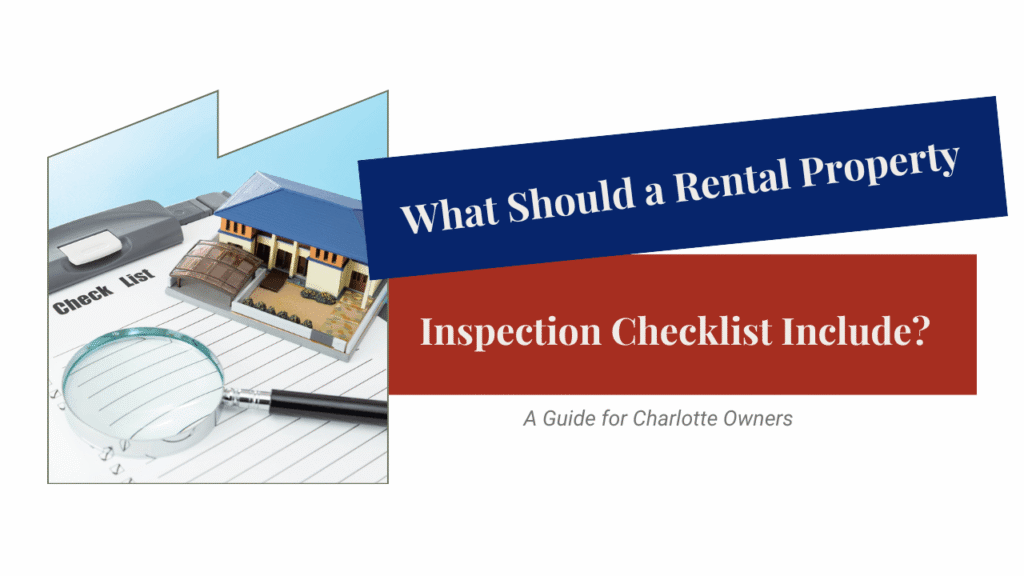
Are you confidently inspecting your Charlotte rental property?
A good inspection will prevent deferred maintenance, identify opportunities for upgrades, save you money on emergency maintenance, and ensure that your tenant is following the terms of the lease agreement.
A good inspection checklist is part of your structured oversight and proactive maintenance. It’s a tool and a resource that not enough owners know to use. As Charlotte property management experts, we have a standardized inspection process that helps owners stay organized, reduce risk, and maintain property value over time.
This guide outlines exactly what your rental property inspection checklist should include, and how you can adapt it for your own purposes.
Quick Summary:
|
Why Does a Rental Inspection Checklist Matter?
A rental inspection checklist is a structured document used during property walkthroughs at key points: move-in, move-out, and periodic inspections during a lease.
Without a checklist, inspections can become inconsistent and subjective. With a checklist, you gain:
- Clear documentation for security deposit disputes
- Early detection of maintenance issues
- Consistency across properties
- Proof that safety standards are being maintained
As you may have noticed, tenant expectations are rising. Having a reliable system in place to protect your property condition and value is essential for long-term success.
Core Categories Every Checklist Should Include
An effective checklist is organized by area and system, allowing you to inspect thoroughly without missing critical details.
- General Interior Condition. Start with items that apply across all rooms.
- Walls and ceilings (cracks, stains, holes)
- Flooring (carpet wear, scratches, tile damage)
- Windows and locks
- Doors and handles
- Light fixtures, switches, and outlets
- Signs of water damage or mold
- Unusual odors (pets, smoke, mildew)
These baseline checks help distinguish between normal wear and tenant-caused damage.
- Kitchen Inspection. The kitchen is one of the most heavily used areas and often one of the most expensive to repair. Checklist items include:
- Sink, faucet, and water pressure
- Cabinets and drawers (alignment and damage)
- Countertops (burns, chips, stains)
- Appliances (refrigerator, oven, dishwasher, microwave)
- Range hood or ventilation system
- Plumbing under the sink
Ensure all appliances are operational and in safe working condition.
- Bathroom Inspection. Bathrooms require close attention due to moisture exposure. Check:
- Toilet function and leaks
- Sink, shower, and tub condition
- Water pressure and drainage
- Tile, grout, and caulking
- Exhaust fans and ventilation
- Signs of mold or mildew
Small issues like cracked caulking can lead to larger structural problems if ignored.
- Bedrooms and Living Areas. These spaces provide insight into how tenants are maintaining the property. Inspect for:
- Flooring condition
- Closet doors and shelving
- Windows and locks
- Light fixtures and ceiling fans
- Unauthorized changes (paint, fixtures, alterations)
Look for patterns of neglect or misuse that could escalate over time.
- Systems and Mechanical Components. A thorough checklist must go beyond surface-level observations. Critical systems to evaluate include:
- HVAC system (airflow, filter condition, operation)
- Water heater
- Electrical panel
- Plumbing system
- Smoke detectors and carbon monoxide detectors
- Fire extinguishers
These systems are essential for both safety and compliance.
- Exterior and Structural Elements. Charlotte’s climate makes exterior inspections especially important. We’re looking at:
- Roof condition (visible damage or missing shingles)
- Gutters and downspouts
- Siding and exterior paint
- Foundation (cracks or shifting)
- Walkways, driveways, and steps
- Railings and fences
- Yard condition and drainage
Addressing exterior issues early can prevent expensive structural repairs later.
- Safety and Security Features. Tenant safety should always be a top priority.
- Door locks and deadbolts
- Window locks and screens
- Exterior lighting
- Smoke and carbon monoxide detectors (tested)
- Emergency exits
- Fire extinguishers
These elements are critical for protecting both tenants and property owners.
- Cleanliness and Overall Condition. While not the primary focus, general cleanliness can indicate how well the property is being maintained. Look for:
- Excessive dirt or neglect
- Pest activity
- Trash accumulation
- Strong or unusual odors
Serious cleanliness issues may point to lease violations or underlying maintenance problems.
Charlotte-Specific Considerations
Some of the local environmental factors that we pay attention to here include:
- Humidity and Mold: Pay close attention to bathrooms, basements, and HVAC systems.
- Heavy Rain and Storms: Inspect roofs, gutters, and drainage regularly.
- Pests: Warm weather increases the likelihood of insects and rodents.
- HVAC Demand: Summers can be intense, so cooling systems must be in excellent condition.
Adapting your checklist to regional conditions helps you stay ahead of common issues.
Best Practices for Using Your Checklist
A checklist is only valuable if it is used consistently and correctly.
Recommended practices:
- Conduct inspections at move-in, move-out, and every 6–12 months
- Take photos and videos for documentation
- Use the same checklist format every time
- Have tenants acknowledge inspection reports when appropriate
- Store records digitally for easy access
Consistency ensures accuracy and protects you in case of disputes.
Inspection Checklist FAQs
- How often should I inspect my rental property?
Typically at move-in, move-out, and every 6–12 months during a lease. - Can I inspect a rental property anytime?
No. You must provide proper notice according to North Carolina law and your lease agreement. - Should tenants be present during inspections?
It’s not always required, but it can improve communication and transparency. - What qualifies as normal wear and tear?
Minor deterioration from everyday use, such as light carpet wear or small scuffs. - Do I need separate checklists for move-in and move-out?
You can use the same checklist, though move-out inspections typically focus more on damage and cleanliness.
A well-designed rental property inspection checklist is a critical management tool. For Charlotte property owners, it provides structure, accountability, and protection.
 By covering interiors, systems, safety features, and exterior conditions, you can reduce risk, control maintenance costs, and maintain a high-quality rental property. Need additional support? Please contact us at Wess Cason Realty. We provide real estate and property management services in Charlotte and the surrounding areas of Mecklenburg, Union, and Cabarrus Counties.

 Wess Cason, Owner/Broker
 Jonathan Cason, Director of Operations
 Bethany Martin, Team Coordinator
 Jason Suitor, Maintenance Operations Manager
 Alyssa Cason Tobin, MBA