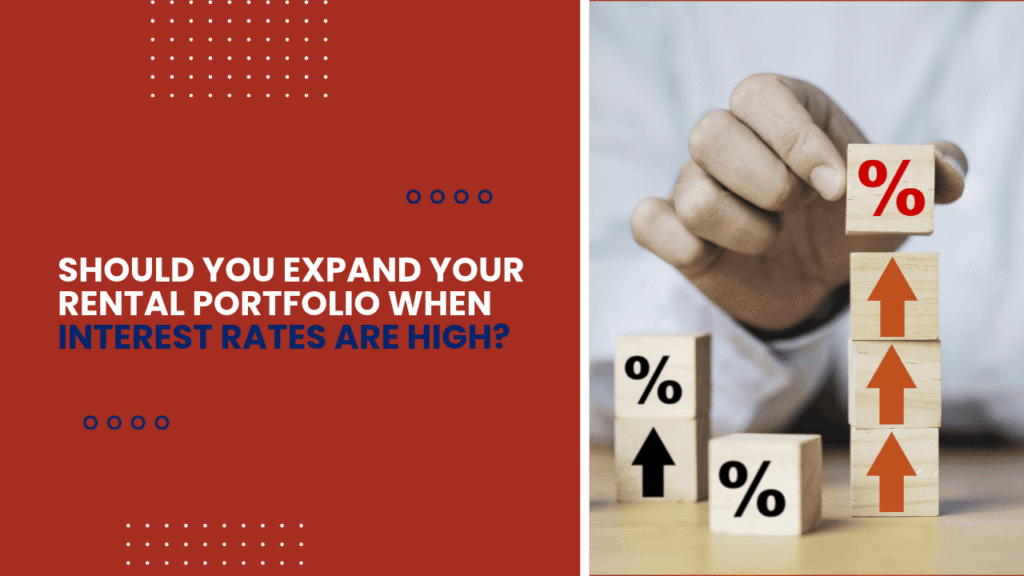
Are you hitting the pause button because interest rates are high?
That may be the best thing for your specific situation. But we like to remind investors that markets move in cycles, and some of the best opportunities emerge when competition cools and fewer buyers are actively pursuing investment properties.
If you’re considering growing your rental portfolio, understanding how higher interest rates affect financing, cash flow, and long-term returns can help you make a more informed decision.
Our Overview:
|
How Do Higher Interest Rates Affect Rental Investments?
Interest rates directly influence the cost of borrowing. As rates increase, monthly mortgage payments rise, which can reduce your property’s monthly cash flow if rents don’t increase at the same pace.
Higher financing costs may also affect:
- Purchasing power
- Return on investment (ROI)
- Debt service coverage
- Loan qualification
- Overall profitability
For example, a property that generated strong cash flow at a lower interest rate may produce slimmer margins after financing costs increase. That doesn’t automatically make it a poor investment; it simply means investors must evaluate deals more carefully.
Why Some Charlotte Investors Continue Buying
Although rising rates create challenges, they can also produce opportunities that aren’t as common during periods of low borrowing costs.
- Less Competition
When financing becomes more expensive, some buyers choose to wait on the sidelines. With fewer competing offers, investors may find more negotiating leverage, longer inspection periods, better pricing opportunities, and sellers who are more motivated. Bidding wars are less likely. Buying in a less competitive environment can sometimes offset the impact of higher financing costs.
- Long-Term Investment Perspective
Many successful rental property owners don’t invest solely based on current interest rates. Instead, they focus on long-term factors such as population growth, employment opportunities, rental demand, and property appreciation potential. Charlotte continues to experience population growth and economic development, helping support demand for quality rental housing across many parts of the region.
Focus on Cash Flow Instead of Interest Rates Alone
One common mistake is allowing interest rates to become the only factor in an investment decision.
Instead, investors should evaluate the entire financial picture.
Consider questions such as:
- Will the property generate positive monthly cash flow?
- Are rental rates sufficient to cover expenses?
- Does the property have appreciation potential?
- Can future rent increases improve returns?
- Are maintenance costs reasonable?
If a property produces healthy cash flow despite higher financing costs, it may still represent a worthwhile long-term investment.
Consider Creative Financing Options
Traditional mortgages aren’t the only financing solution.
Depending on the property and your financial situation, investors sometimes explore options such as:
- Adjustable-rate loans
- Seller financing
- Portfolio loans
- Private lending
- Investment partnerships
Each financing option comes with unique risks and benefits. Before choosing an alternative loan structure, investors should fully understand repayment terms, interest adjustments, fees, and potential long-term costs.
Our Recommendation: Keep More Cash in Reserve
Higher interest rates often coincide with broader economic uncertainty. Maintaining adequate cash reserves becomes even more important during these periods. It can also help you expand without sacrificing peace of mind.
Emergency funds can help cover:
- Unexpected repairs
- Temporary vacancies
- Insurance deductibles
- Property taxes
- Major maintenance
- Slower leasing periods
Many experienced investors prioritize financial flexibility over maximizing leverage.
Be Selective About Property Choices
When financing costs increase, buying the right property becomes even more important. Look for properties with characteristics that support stable long-term performance, including:
- Strong rental demand
- Desirable locations
- Functional floor plans
- Reasonable maintenance requirements
- Competitive purchase prices
Rather than expanding rapidly, many investors shift toward acquiring fewer but higher-quality properties.
Don’t Count on Refinancing
Some buyers assume they’ll refinance into a lower interest rate later.
While refinancing may become possible if rates decline, there’s no guarantee when, or if, that will happen. For that reason, it’s wise to evaluate each purchase based on today’s financing terms.
If the investment only works under the assumption of a future refinance, it may deserve a closer look before moving forward.
When Does Waiting Make Sense?
Expanding isn’t always the right decision. Waiting could be appropriate if:
- Your current properties have unstable cash flow.
- You lack sufficient emergency reserves.
- You anticipate major personal financial changes.
- Available properties don’t meet your investment criteria.
- Financing would stretch your budget too thin.
Passing on marginal deals can position you to take advantage of better opportunities later.
Building a Portfolio for the Long Term
Successful real estate investing isn’t about perfectly timing interest rates. It’s about consistently acquiring properties that fit your investment strategy and financial objectives.
For many Charlotte rental property owners, periods of higher interest rates encourage greater discipline. Investors often analyze deals more carefully, negotiate more aggressively, and prioritize properties with strong fundamentals instead of relying on rapid appreciation alone.
High interest rates may change your strategy, but they don’t necessarily eliminate the opportunity to expand.
Frequently Asked Questions

Q: Should I buy rental property when interest rates are high?
It depends on the property’s cash flow, purchase price, financing terms, and your long-term investment goals. A strong deal can still make sense even in a higher-rate environment.
Q: Can I refinance later if rates drop?
Possibly, but refinancing depends on future interest rates, your financial qualifications, and the property’s value. It’s best to ensure a purchase works under current financing conditions rather than relying on future rate changes.
Q: Do higher interest rates reduce rental demand?
Not necessarily. In some markets, higher mortgage rates can keep more people renting because homeownership becomes less affordable, potentially supporting rental demand.
Q: What should Charlotte investors focus on most?
Rather than concentrating solely on interest rates, evaluate cash flow, rental demand, neighborhood fundamentals, operating expenses, and your ability to comfortably manage the investment over the long term.
Please contact us at Wess Cason Realty to talk more about how you can work with existing and shifting interest rates. We provide real estate and property management services in Charlotte and the surrounding areas in Mecklenburg, Union, and Cabarrus County.

 Wess Cason, Owner/Broker
 Jonathan Cason, Director of Operations
 Bethany Martin, Team Coordinator
 Jason Suitor, Maintenance Operations Manager
 Alyssa Cason Tobin, MBA